
We help individuals and businesses understand how to remove results from Google search when unwanted or harmful content appears online.
If you’ve searched your name or business and found negative links ranking on page one or two of Google, your first step should always be to explore legitimate removal options at the source.
This guide explains how to remove a website from Google search results, outlining what you can do yourself, when Google may assist, when legal options apply, and when professional removal becomes the most practical path.
- Overview
- Method #1: Contact the website owner or author
- Method #2: Request removal directly from Google
- Method #3: Legal options for content removal
- Method #4: Professional removal services
- Types of Google search results we handle
- FAQ
- Summary
Overview
In the video below, Matt and I discuss our professional process for removing negative from Google search results.
Finding negative content in Google search results can feel urgent and overwhelming.
If you can see it, potential employers, customers, investors, or partners can see it too.
The good news is that Google search results are not permanent in every case. Depending on the source, content type, and situation, there may be legitimate ways to remove, update, de-index, or replace harmful results.
Below, we outline the most reliable and ethical methods for removing search results from Google, starting with options you can try yourself.
#1 Contact the website owner or author
The fastest and most effective way to remove a result from Google is to have the content removed or modified at its source.
If the page no longer exists or is updated, Google will eventually stop showing it.
If you don’t immediately know who owns the website, try the following:
- Visit Whois.com, enter the domain name, and check the registrant contact details. If the listing is private, move to the next option.
- Search Google for the domain name plus the word “owner” to locate a contact page, social profile, or business listing.
If those methods fail, posting a polite inquiry on platforms like Reddit or Quora can occasionally surface ownership information.
Reaching out to journalists or publishers
When the content was published by a journalist or media outlet, proceed carefully.
Editors and reporters are not obligated to remove content, and in some cases outreach can unintentionally draw more attention to the story.
Potential risks include:
- Increased visibility through social sharing or follow-up coverage
- Escalation if the request is interpreted as censorship or legal pressure
If you decide to proceed, keep communication professional and factual.
Sample outreach template
Subject: Request for Review of Published Content
Dear [Author’s Name],
I recently came across an article referencing [specific content]. I wanted to reach out to ask whether a correction, update, or removal might be appropriate based on current information.
Please let me know if additional documentation would be helpful.
Thank you for your time,
[Your Name]
Possible outcomes include full removal, partial modification, or the addition of a noindex tag, which removes the page from Google search results while allowing it to remain accessible via direct link.
#2 Request removal directly from Google
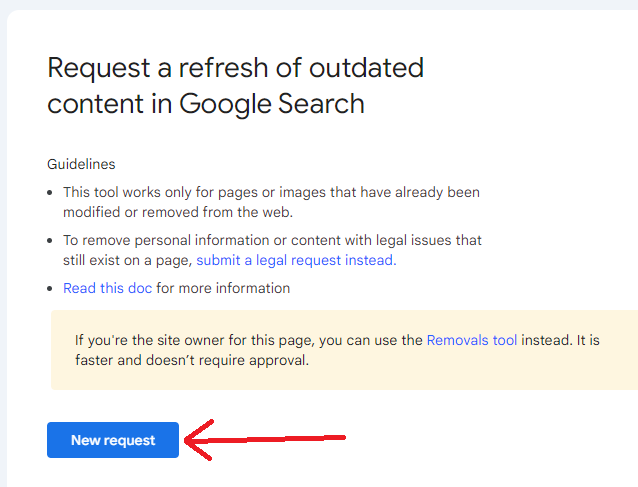
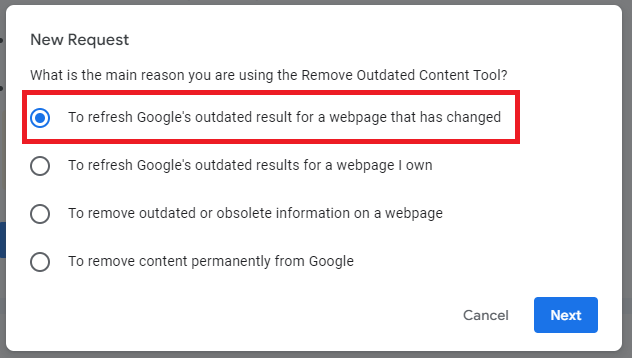
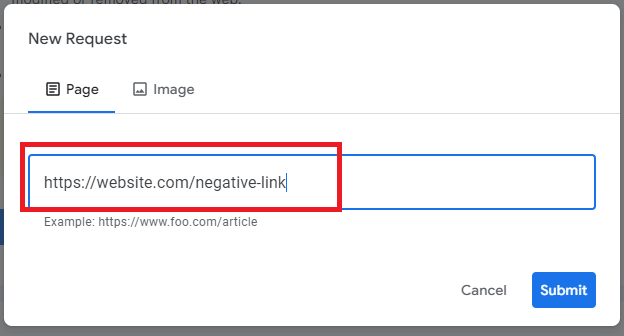
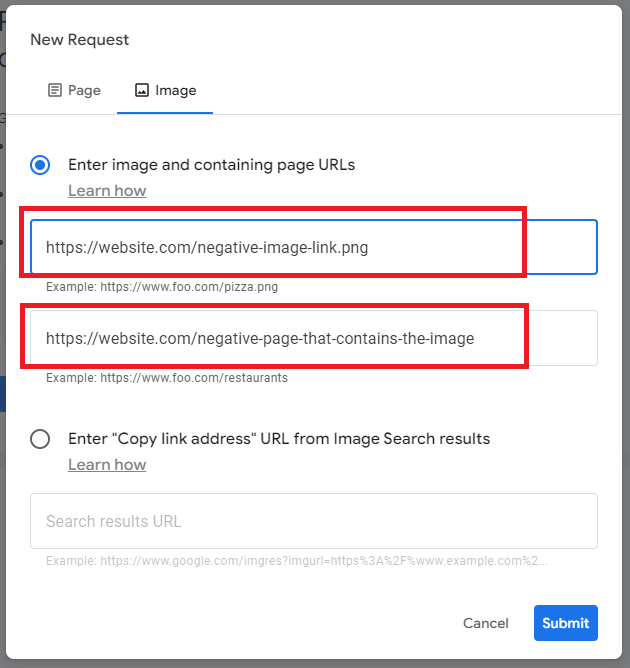
If content has already been removed or updated but still appears in Google search, you can request faster removal using Google’s tools.
The Refresh Outdated Content tool allows you to request re-crawling of pages that no longer exist or have changed significantly.
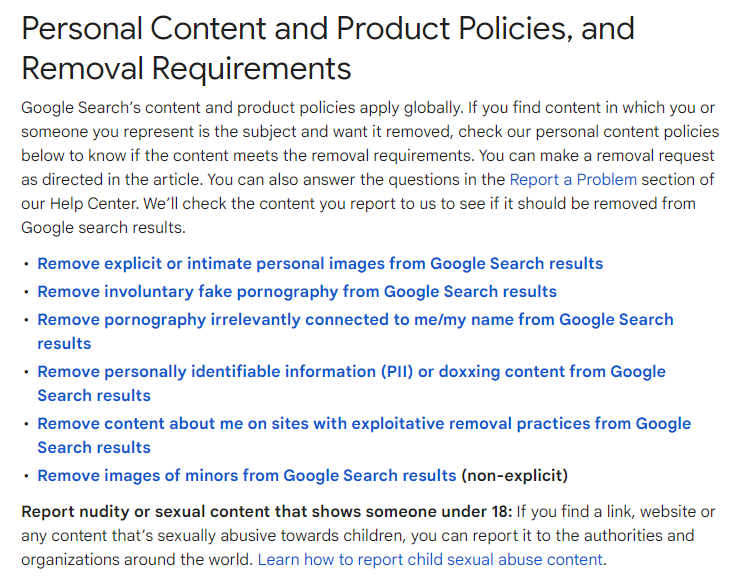
Google may also remove content that violates its personal content policies, such as:
- Personally identifiable information
- Explicit images of minors
- Non-consensual explicit content
A full list of eligible content types is available here.
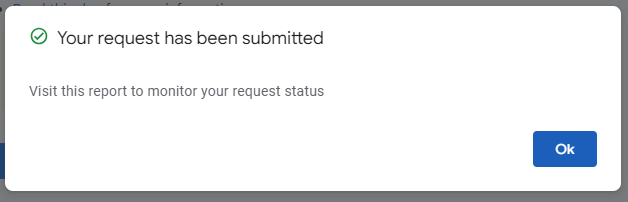
Using Google’s outdated content removal tool
#3 Legal options for content removal
Some content can only be removed through legal means, typically when it is defamatory or violates privacy laws.
Attorneys may pursue court orders requiring publishers or search engines to remove or de-index content.
This approach can be effective but often involves higher costs, longer timelines, and uncertain outcomes.
For many individuals and small businesses, legal action is not the most efficient first step.
#4 Professional removal services
When self-help and platform tools are unsuccessful, professional assistance may be appropriate.
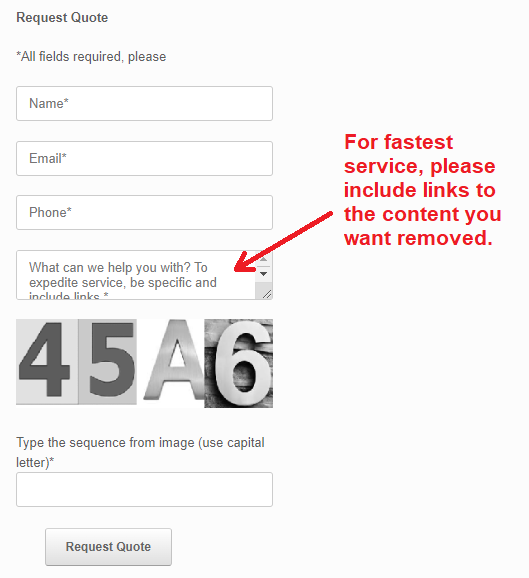
Our role is to evaluate whether a result can realistically be removed, estimate timelines, and outline options clearly before work begins.
Our process
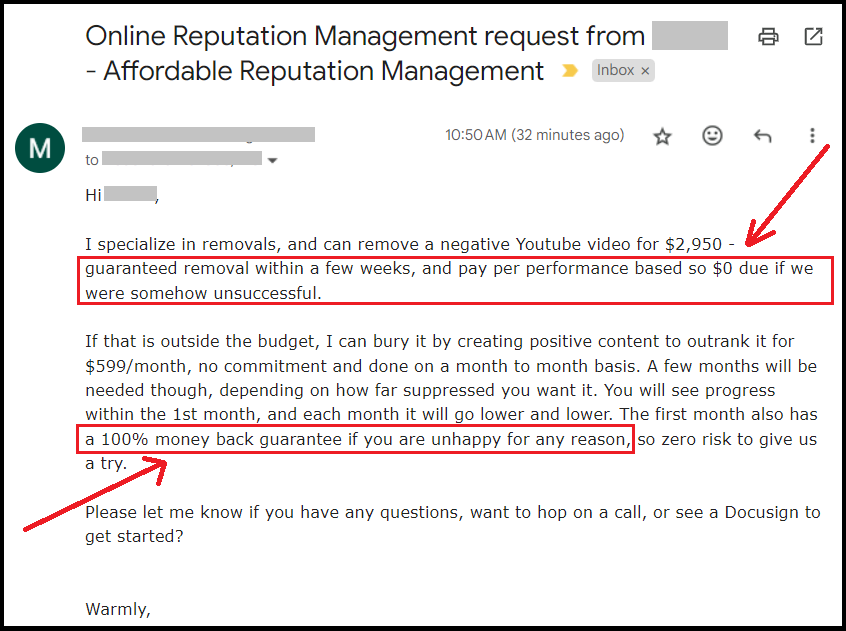
Success varies by content type, source authority, and history.
If removal is not feasible, we may recommend suppression strategies such as burying negative search results with stronger, accurate content.
Types of Google search results we handle
- Government (.gov) listings
- Reviews on Google, Yelp, TrustPilot, Indeed, Glassdoor
- Complaint sites such as Gripeo and Ripoff Report
- Public court records
- News articles
- Reddit threads
- YouTube videos
FAQ
How do I remove something from Google search results?
Start by contacting the website owner, then explore Google’s removal tools. If those options fail, professional or legal assistance may be appropriate.
Can I block a website from appearing in Google?
You cannot block a website you don’t own, but individual pages may be removed, updated, or de-indexed under certain conditions.
Summary
There are multiple legitimate ways to remove results from Google search, depending on the source and circumstances.
Some options can be handled independently, while others require professional coordination or legal review.
If you’re unsure which path applies to your situation, a consultation can help clarify realistic options and next steps.