
If your name appears on UniCourt and is showing up in Google search results, it can be stressful and confusing to understand what your real options are.
Many people are unsure whether UniCourt records can be removed at all, what qualifies for redaction, and what to do if a request is denied.
This page is designed to help you understand how UniCourt records work, when removal may be possible, and when professional assistance may make sense, so you can decide your next steps with clarity.
- What Is UniCourt?
- Why UniCourt Records Appear In Google
- Can You Remove UniCourt Records Yourself?
- When UniCourt Records Usually Cannot Be Removed
- What Happens If UniCourt Denies Your Request?
- When Professional UniCourt Removal Help May Make Sense
- Our UniCourt Removal Assistance
- Frequently Asked Questions
- Next Steps
What Is UniCourt?
UniCourt.com is a legal data platform that aggregates state and federal court records into a single searchable database.

It is commonly used by attorneys, researchers, insurers, journalists, and other professionals who need access to case information.
As of recent years, UniCourt reports that its database includes:
-
Over 135 million state and federal cases
-
Hundreds of millions of court documents
-
Billions of docket entries involving parties, attorneys, and judges
Because UniCourt is an aggregator, records listed there often also appear on other public court record websites.
That is one reason UniCourt listings frequently surface in Google search results when someone searches a name.
Why UniCourt Records Appear In Google
UniCourt does not usually create court records.
Instead, it collects publicly available data from court systems and republishes it in a searchable format.
When Google indexes those pages, a person’s name can become associated with:
- Civil cases
-
Criminal matters
-
Judgments
-
Filings or docket activity
Even when a case is old, dismissed, or resolved, the record may continue to appear in search results unless action is taken.
Can You Remove UniCourt Records Yourself?
In some situations, yes.
According to UniCourt’s public policies, the company may consider redacting or removing records when certain conditions are met.
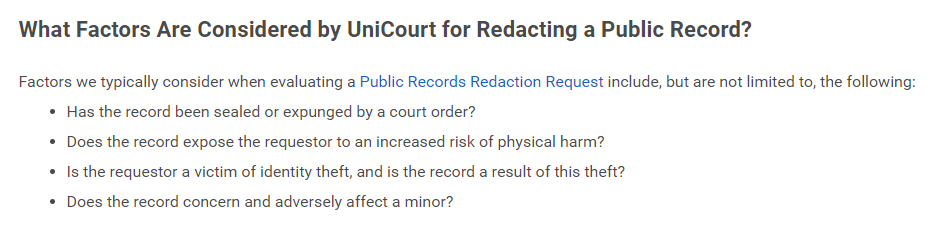
Common factors that UniCourt may review include:
-
Whether a case has been sealed or expunged
-
Cases involving minors
-
Verified identity theft
-
Situations involving credible risk of harm
If your case meets one of these criteria, you may submit a redaction or removal request directly to UniCourt.
UniCourt provides a public request form here: https://unicourt.com/case/removeRecord
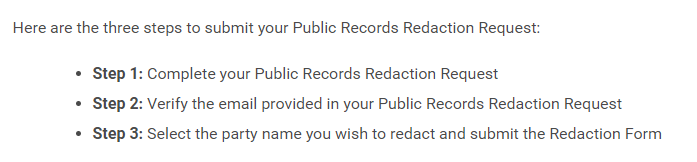
After submission, UniCourt states that requests are typically reviewed within approximately 30 days.
If a record is redacted or removed, Google may update its search results over the following weeks, although timing is controlled by Google’s indexing process.
When UniCourt Records Usually Cannot Be Removed?
It is important to understand that not all UniCourt records are eligible for removal.
Requests are commonly denied when:
-
A case is not sealed or expunged
-
The matter is still active
-
The record is considered part of the public interest
-
No qualifying privacy or safety factors are present
In these situations, submitting repeated requests without proper documentation often does not change the outcome
What Happens If UniCourt Denies Your Request?
When a record cannot be removed directly from UniCourt, people generally face two options:
-
- Leave the record as-is
- Take steps to reduce its visibility in search results through lawful reputation management strategies
Because court record websites often share data with one another, a single case may appear across multiple platforms.
This is why addressing the issue thoughtfully, rather than reactively, matters.
When Professional UniCourt Removal Help May Make Sense
Some individuals choose to seek assistance when:
-
They are unsure whether their case qualifies for redaction
-
A prior request was denied
-
Multiple court record sites are involved
- The listing is affecting employment, housing, or professional reputation
In these cases, having guidance can help ensure requests are properly prepared, documented, and submitted through the correct channels.
Our UniCourt Removal Assistance
We assist clients with UniCourt removal requests on a case-by-case basis, based on eligibility and documented circumstances.
Our role is to:
-
Review your situation
-
Determine whether removal or redaction may be possible
-
Assist with the submission and follow-up process
-
Advise on next steps when direct removal is not available
Our guarantee
We offer a pay-only-if-successful service model.
If we take your case and are unable to achieve a successful outcome, you do not pay.
This approach is designed to protect clients from paying for results that cannot be achieved.
Frequently Asked Questions
Is UniCourt removal a one-time fee?
Yes. Our service is billed as a flat fee and is only due after a successful outcome.
Will my UniCourt record return after removal?
If a record is properly removed or redacted based on eligibility, it should not reappear. However, future court activity may generate new records.
Does removal apply to all search engines?
When a record is removed or redacted at the source, search engines typically update their listings over time.
Does this remove records from UniCourt’s paid database as well?
When a record is removed or redacted, it is no longer accessible through UniCourt’s platform, including subscriber searches.
Next Steps
If your name appears on UniCourt, the first step is understanding whether removal is possible in your situation.
We recommend starting with a direct request when appropriate, as it is free and straightforward.
If that process is unsuccessful or you are unsure how to proceed, we can help you evaluate your options.
To speed up a review, please include the exact UniCourt link you would like addressed when contacting us.